Print
Harvard Independent

The Holiday Markets You Must Visit This Month

With the winter season comes everything festive, from music and food to decorations and lights. Ringing in the cold months ahead, holiday markets in Cambridge and Boston allow local businesses to sell their products and shoppers to come together in holiday spirit. Explore the festivities on display and the talented entrepreneurs behind them at some of the best local markets this season. 

Cambridge Arts’ Holiday Market

The Cambridge Arts’ Holiday Market, located right in the Smith Campus Center in Harvard Square, features a variety of art vendors selling hand crafted artwork, jewelry, clothing, and more. Featuring live music and a large selection of local vendors, the market will run from December 8 to December 10, from 11 AM to 6 PM each day.

The Market was home to all sorts of business owners selling their products, from artwork to accessories to calendars. Rakel Papke Seixes’s festive stand showcased various Christmas gifts, tote bags, and humorous drawstring backpacks from her business “By Papke.” 

Across the room, Laura Quincy Jones was selling greeting cards with watercolor and ink illustrations that she designs. Jones, whose business is named after herself, has participated with the Cambridge Arts Council in open studios for almost twenty years. One of her favorite parts of the Market is meeting people who are interested in art.  “Of course, it is important to support your work, but it is really nice to communicate with buyers,” she said. 

Daisy Hebb from Green Blossom Painting, who joined the Cambridge Arts’ Market last year, echoed that she also likes selling at fairs because of the interpersonal interactions. She sells calendars which celebrate nature, and she said she loves speaking to people about their relationships with nature at the market. But the engagement with people extends beyond the selling stage.  “These calendars are collaborations between myself, the artist, and scientists, like native bee specialists, a professor of entomology, and an herbalist specialist,” Hebb shared. 

Lloyd Williams of Boston Custom Cards sells acrylics on canvas, along with holiday notecards. He said conversations with shoppers at markets help guide him on what kind of products people are interested in. “I do a lot of landscapes and cityscapes of Boston, so I figured out that people in Boston like a lot of Boston-related artwork,” Williams explained. The Cambridge Arts’ Market was just one of a few holiday shows he attends every year. Find him on Instagram @varsudan999.

Snowport

Nestled in Boston’s Seaport neighborhood, Snowport features over 120 local small businesses, food, a tree market, and other essentials. In its second year, this widely popular holiday market transforms Seaport into the perfect destination for holiday shopping or a photo-op.

Simply Placed, owned by Sydney Ortega and located in Beverley, Massachusetts, specializes in home decor, and sells Christmas decorations at the market. “This is our first time here in Boston,” Nancy Foster explained, an employee of Simply Placed.  Foster said the holiday market gives Simply Placed good exposure, considering they also sell online, allowing them to expand their customer base. “All of our business cards are gone. People are always asking about us.”

Katie Gogishvili, who sells handmade jewelry in her company MOTTIVE inc., also appreciated the opportunity to gain exposure for her business. She explained she wanted to sell at Snowport because it allows for small businesses such as hers to get attention and recognition. “This is a perfect place for people to find me. Everyday, there are new people who I get to know, and they get to know my brand.” Markets like this help businesses grow, Katie said. “It is important to keep my jewelry in the community.”

While some business owners only had one stand, others ran multiple. The Happy Cactus is just one of several businesses that owner Tucker Gaccione has at Snowport. Donald, an employee at The Happy Cactus, explained they specialize in gift items, such as 1000-piece vintage puzzle sets and butterflies that were sourced ethically from Peru and other South American countries. “The items are beautiful,” Donald said. He said the appeal of markets like this are the foot traffic, explaining he loves seeing customers reacting to the items on sale. “There’s nothing else that could put a smile on my face. We could do online sales, but we lose that people-aspect.”

Yamacu Gift Shop sells African-based products, such as spices, teas, shea butter, snacks, and more. Khalifa, who works for his aunt, explained that his aunt wanted to sell at Snowport due to its popularity. “There are a lot of people [who go to Snowport], so it is a great way to make money.” Khalifa explained that these markets help Yamacu grow, and though it is a lot of work, “being at this kind of market gives exposure, allowing more people to see and try your business. In the long run, it is good for the business.” 

Boston Women’s Holiday Market, Brighton

The Boston Women’s Market, co-founded by owners Cara and Africa, is a market made to help support women-owned businesses. The Holiday Market, which runs at a variety of locations on various days, from The Speedway in Brighton and The Station on Boylston Street, features local women-owned businesses selling jewelry, pastries, art, clothing, and more.

Rachel Kashdan sells cupcakes, gingerbread kits, and hand-designed cards in her business “batter+bloom.” Kashdan spoke positively of the Boston Women’s Market. “The organizers, Cara and Africa, are great to work with,” Kashdan stated. “Everyone who sells at the markets are really creative and great people to be around, especially during the holidays.” Kashdan has a lot of fun getting to interact with the community through selling at the market, getting to know people she hasn’t met before, and seeing them enjoy her work, as she is “proud of what she makes.”

Willis & Bell sells handmade clothing and other handmade items. “It would be a great burge of different types of people getting to see all of my items,” Amy, the owner of Willis & Bell said, when asked why she wanted to sell at the market. 

Dani, the owner of Best Friend Supplies co., sells dog accessories, including bandanas, bows, and leash sleeves, an “advocacy tool that helps owners advocate for the space for their dog. Dani wanted to sell at the Boston Women’s Market because of the people. “We have a really nice community here. Sometimes as small-business owners, you feel isolated in the way you are alone and making everything,” Dani said. “When you come here, you are amongst a lot of other women who get it. You feel supported, and the markets themselves are very uplifting spaces where you can meet a lot of new people.”

Julia of Celia Jane Designs, named after her daughter, makes handmade jewelry. Julia agreed that the Boston Women’s Market offers a supportive environment for sellers. “This is my third one. [The owners] are great about creating a unique environment for shoppers,” she said. “I am in some stores around the area, but this is the best way to meet and see people.”

Print
Yahoo

MIT Sloan professor’s new book chronicles the crazy, complicated love story of Harvard Square–and downtowns across America

Author Catherine J. Turco explores the attachments we form to the markets in our lives

CAMBRIDGE, Mass., Dec. 7, 2022 /PRNewswire/ — Why do so many of us feel like our local Main Streets and downtowns are not what they used to be? This question lies at the heart of a new book, Harvard Square: A Love Story (Columbia University Press)by Catherine J. Turco, an economic sociologist at the MIT Sloan School of Management.

New book, Harvard Square: A Love Story, explores why many believe local Main Street markets are not what they used to be

Using the case of Harvard Square, Turco explores the role of street-level markets in our daily lives, why we fall in love with them, and why we so often struggle with changes in them. Located in Cambridge, MA, directly adjacent to Harvard University, “the Square”—as it is affectionately called by locals—has for years served as a commercial center to residents and students in the area. Harvard Square: A Love Story dives deeply into the history of this one beloved marketplace, revealing, in the process, the complicated love affair Americans everywhere have long had with their own downtowns.

Turco’s initial impetus for the project was personal. She came to know and love the Harvard Square marketplace as a young girl, visiting her grandfather at his work as a Massachusetts Bay Transit Authority bus driver whose route took him through the Square each day, and having breakfast there with her father every Sunday morning. She went on to attend Harvard University, from which she earned a BA in economics, an MBA, and PhD in sociology. Years later, having moved back to Harvard Square, she began to worry that the vibrant marketplace she recalled from her youth wasn’t what it used to be, and she set out to understand why. Turco’s historical research soon unearthed a surprising finding, however: For hundreds of years, it seemed, one generation after another had lamented that Harvard Square “wasn’t what it used to be.

“At that point, I realized I had an even bigger puzzle to tackle,” Turco says. “I had to understand why Harvard Square had always been not what it used to be—and what that meant, more generally, about our relationship with markets and market change.”

With an eye for forensic detail, Turco conducts “autopsies” of dearly departed Harvard Square businesses to reveal the variety of market forces constantly creating change at the street level. She also dives into the most heated moments in Harvard Square’s history to investigate why certain changes have provoked extreme public outrage and why others have not.

Turco continually invites readers to shift their vantage point so as to see things from the often-contrasting perspectives of residents, activists, business owners, and landlords, all of whom forge their own deep attachments to the marketplace. Readers meet compelling characters, past and present, such as the early 20th century businessmen who bonded over scotch and cigars to found the Harvard Square Business Association; a feisty, frugal landlady who became one of the Square’s most powerful property owners by the mid-1900s; a local neighborhood group calling itself the Harvard Square Defense Fund that fought real estate developers throughout the 1980s and ’90s; and a local businesswoman who in recent decades strove to keep her shop afloat through personal tragedy, the rise of Amazon, and a globalizing property market that sent her rent soaring.

Harvard Square: A Love Story transcends existing economic and sociological theories to offer a powerful new lens for understanding markets—one that exposes the myriad (often hidden) ways in which our markets lend our lives stability and instability, security and insecurity. The book ultimately argues that our relationship with the markets in our lives is so complicated—and can provoke so much love and outrage—because, at its heart, it is about our relationship with ourselves and one another, how we come together and how we come apart.

Starting with the 17th century open-air market that sat atop the sloping hill off the banks of the Charles River and carrying readers up through the height of the pandemic, Turco reveals what a central, and centrally important, social institution street-level markets have always been in American life. The book concludes by raising a set of tough questions we must ask ourselves in our particular historical moment of streaming content, delivery on demand, and zoom meetings: What relationship do we want to have with our street-level markets going forward?

“Do we want to recommit to our dear old friend the marketplace?” Turco asks at the end. “Do we want to meet one another for coffee only in the Metaverse? Do we want the Amazon marketplace to be the only marketplace we visit? How much of our social and economic lives do we want to spend separated from one another by our screens instead of meeting in person in our town centers and neighborhood markets?”

Print
Harvard Gazette

Abercrombie continues to flourish, with community support

FAbercrombie continues to flourish, with community support – Harvard Gazetteive years from his life-changing football injury, Ben Abercrombie continues his journey through Harvard, among a community which fiercely supports one of its most inspiring members.

Following his spinal cord injury, the Benson M. Abercrombie ’21 Fund was established by the Harvard Varsity Club (HVC) to assist the Abercrombie family with the significant medical and continuing care expenses they incur. Three annual community events are held to support the fund, including El Jefe’s Ben Abercrombie Day, Bowl for Ben, and 3.2 for Ben.

Though El Jefe’s has a new home at 14 Brattle St. in Harvard Square, owner John Schall’s annual Ben Abercrombie Day continues just the same when the fundraiser returns for a fifth year Dec. 6. All members of the Harvard community are invited to patronize the restaurant from 8 a.m. Dec. 6 to 4 a.m. Dec. 7, with all proceeds from the day (including gift card sales) donated to the Abercrombie Fund. To date, the El Jefe’s fundraiser has raised over $125,000.

Last month, the HVC hosted its third annual 3.2 for Ben, a fundraising event that began under the gathering restrictions of the pandemic. This year, nearly 500 participants independently ran or walked 3.2 miles, at their own time and pace. The distance was chosen to honor the jersey number 32 that Abercrombie wore for the Crimson. The HVC also hosted its third annual Bowl for Ben fundraiser on Nov. 18 in Boston’s Seaport District, on the eve of the 138th playing of The Game. More than 150 supporters turned out to celebrate the guest of honor.

In his first varsity football game in 2017, Abercrombie suffered a spinal cord injury which left him paralyzed below the neck. The economics concentrator has continued his education while battling years of medical treatment and extensive rehabilitation.

Print
The Crimson

Princess Kate of Wales Visits Harvard’s Center on the Developing Child

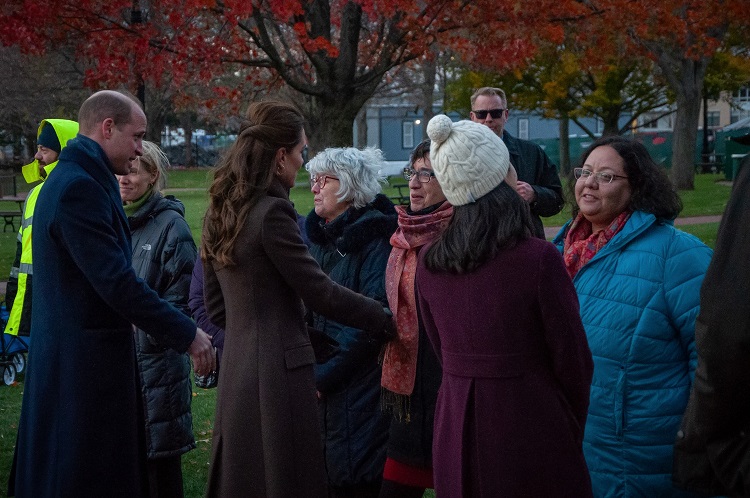
The Prince and Princess of Wales walk along the waterfront in Boston during their visit to the city last week. By Grace R. Bida

By Charlotte P. Ritz-Jack, Crimson Staff Writer

13 hours ago

Princess Catherine of Wales visited the Center on the Developing Child at Harvard University on Friday as part of her tour of Boston alongside her husband, Prince William of Wales.

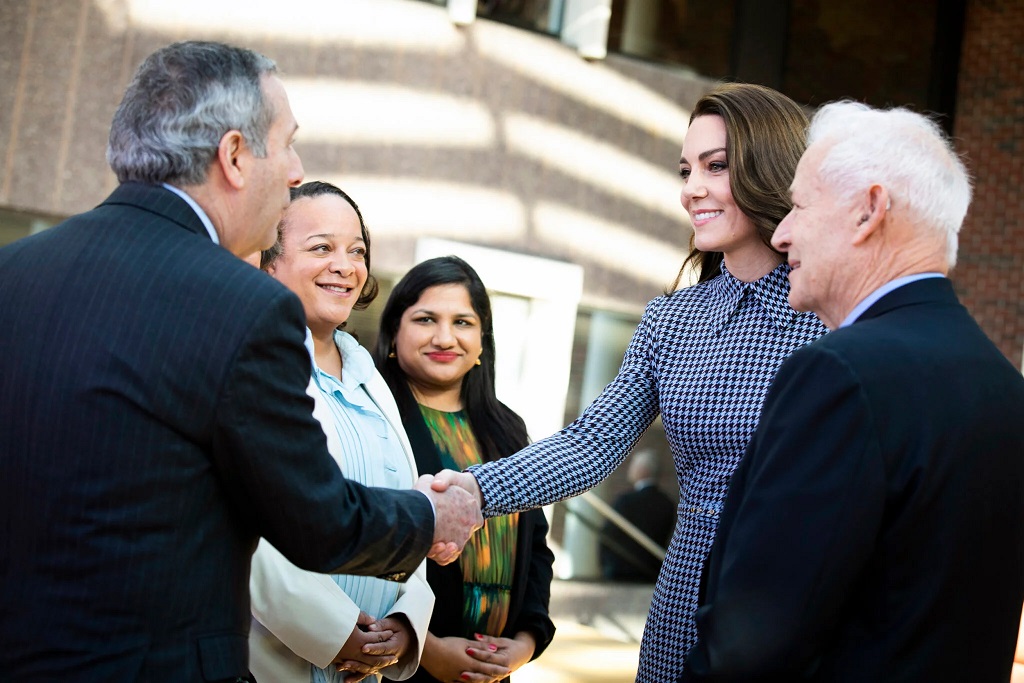
The visit comes as part of a partnership between the Center on the Developing Child and the Royal Foundation Centre for Early Childhood, an organization the princess launched in June 2021. Kate was greeted at Harvard by University President Lawrence S. Bacow, Harvard Graduate School of Education Dean Bridget T. Long, and Cambridge Mayor Sumbul Siddiqui.

Meanwhile, the Prince met with President Joe Biden at the John F. Kennedy Presidential Library and Museum in Dorchester, Massachusetts.

The royal couple’s Boston tour culminated in a celebration of the Earthshot Prize, an award the Prince established to encourage innovation addressing climate change.

The Harvard Center on the Developing Child conducts research and development on issues of early childhood to foster effective policy-making. The Royal Foundation aims to produce research and campaigns improving children’s early years and to support underserved children around the world.

Jack P. Shonkoff, the director of the Center on the Developing Child, said in a Friday press conference that the organization aims to serve as “a resource for trusted, credible, cutting-edge science of early childhood” to inform the princess’ work.

“The reason for the visit was, first, to have a chance to meet face to face — we had not before,” he said. “It’s clear as her center, her new center, is poised to go out more publicly, she is really interested in a partnership with us and we are very interested in a partnership with her.”

Shonkoff said he was impressed by the Princess’s work to “connect the science to the lived experiences of people.”

“I was just very taken and really inspired by how serious she is about wanting to lean into an early childhood agenda,” he said.

Shonkoff also described the royals’ visit as key for drawing public attention to the center’s work.

“For me, the real home run here is giving attention to the issue,” he said.

Tobechukwu O. Nwafor ’25, one of the many Harvard students who gathered to meet the Princess on Friday, said her presence drew new attention to the work being done at the center.

“I didn’t even know that there was a Center on the Developing Child at Harvard,” he said in an interview. “So I think that even if she could even get people to look up the center, that’s an important thing.”

Crowds gathered in Harvard Square Friday to greet the Princess. Nawfor estimated more than 500 people flanked Church Street in anticipation for her arrival.

“I think it’s a once in a life-time opportunity to see a Princess — the Princess,” he said. “It was surreal.”

—Staff writer Charlotte P. Ritz-Jack can be reached at charlotte.ritz-jack@thecrimson.com. Follow her on Twitter @Charritzjack.

Print
CBS News

Prince and Princess of Wales finish 3-day Boston trip with Earthshot awards

Prince William and Catherine, Princess of Wales visited the United States for the first time in eight years with a three-day trip to Boston.

The royal couple focused their attention on their Earthshot Prize for environmental innovators Friday night. Prince William said he was inspired by JFK’s “Moonshot” speech to create a decade of action and collaboration to combat climate change. 

Print
Yahoo

Kate Middleton Takes Harvard! Princess of Wales Steps Out for Solo Outing in the U.S.

279

  • Charles, Prince of Wales
  • Catherine, Princess of Wales
  • William, Prince of Wales

0:41

1:14

Kate Middleton Takes Harvard! Princess of Wales Steps Out for Solo Outing in the U.S.

 development and providing 
 children with the best 

Scroll back up to restore default view.

People

Kate Middleton Takes Harvard! Princess of Wales Steps Out for Solo Outing in the U.S.

Kate Middleton is learning new things at Harvard!

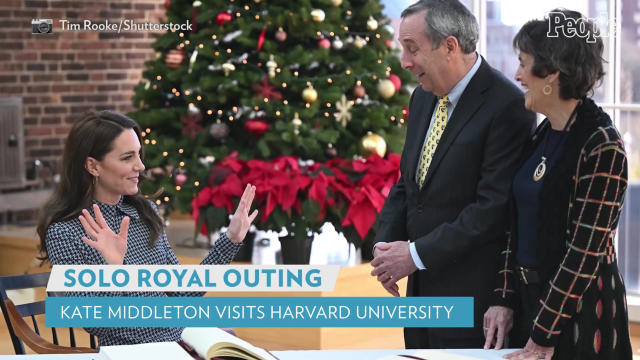
The Princess of Wales made a solo outing on Friday morning as part of her three-day visit to the United States alongside her husband Prince William. The royal visited Harvard University outside Boston, heading to the prestigious school’s Center on the Developing Child.

Kate, 40, spoke with researchers about the advances in science that can be harnessed to achieve a promising future for every child. During her conversation with the experts, she was diligently taking notes.

During the outing, Kate echoed her father-in-law King Charles‘ own visit to Harvard University in 1986 when she signed the guest book — 36 years after the future King signed his name.

Print
Harvard Gazette

Princess makes most of Harvard visit

Catherine, the Princess of Wales, stopped at Harvard’s Center on the Developing Child on Friday as part of a visit to the Boston area with her husband William, now Prince of Wales and second in line to the throne behind his father, King Charles III.

The couple arrived in Boston on Wednesday. They traveled to the city to award the second annual Earthshot Prize — founded by the prince and given by the Royal Foundation of the Prince and Princess of Wales to innovators working on climate change solutions — in a ceremony Friday night.

Presented in conjunction with the John F. Kennedy Foundation, the Earthshot Prize awards ₤1 million to five winners, each working in a unique field — nature protection and restoration, air quality improvement, ocean revival, waste reduction, and emissions control.

The prince noted during the trip that he was inspired by President Kennedy’s 1962 “moonshot” speech and subsequent space exploration efforts. Kennedy’s example was one of the key inspirations in bringing the prize to Boston, according to the prince.

“Boston was also the obvious choice because your universities, research centers, and vibrant start-up scene make you a global leader in science, innovation, and boundless ambition,” he said at a City Hall kickoff event.