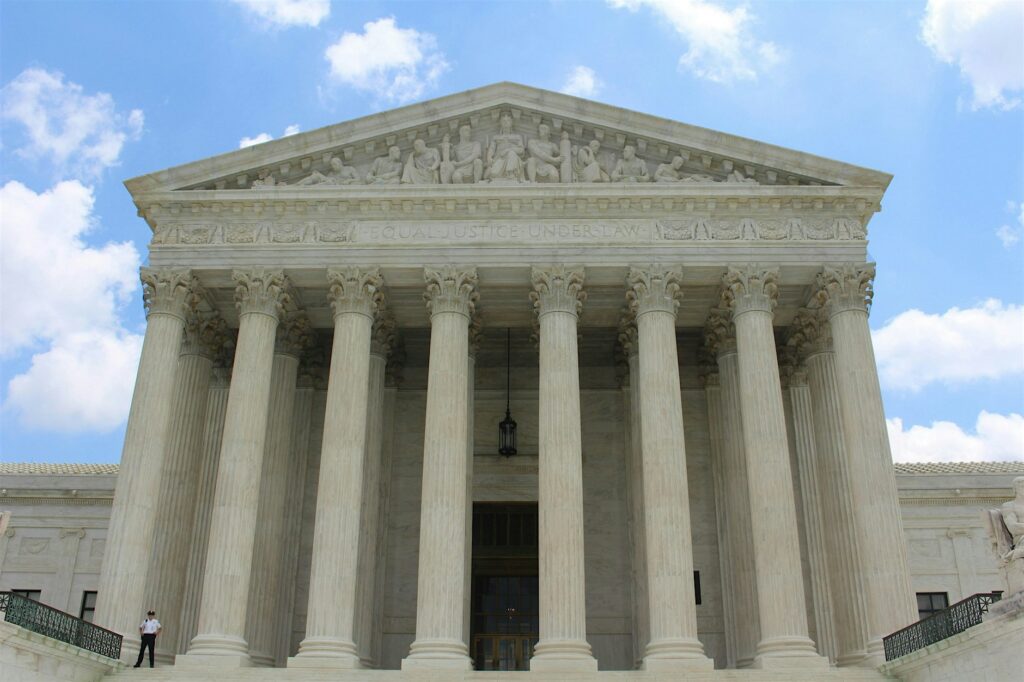
Was the Supreme Court ever what we thought it was?
Public trust in the Supreme Court is near a three-decade low, according to Pew Research Center: only 45% of Americans currently view the Court favorably, down 20 points from 2021, with Republicans and Democrats now divided by 44 percentage points in how they see it. Most Americans, across party lines, still say justices shouldn’t let politics shape their rulings, and most also believe, increasingly, that they do.
But is that a new failure, or a return to an older reality we’ve simply forgotten? Was there ever a Court that stood apart from politics, or did we just get better, for a while, at believing in one?
Rachel A. Shelden, author of The Political Supreme Court: A Forgotten History, has spent her career studying how the Court actually operated in its first century, long before the modern ideal of judicial neutrality took hold. Peter S. Canellos, author of Revenge for the Sixties: Sam Alito and the Triumph of the Conservative Legal Movement, has spent his time tracing how one justice’s life story became constitutional doctrine.
Together, they’ll tackle the questions at the center of this moment: Has the Supreme Court always been political? If so, why does it feel different today? And if Americans are losing faith in the Court, what does that mean for the future of checks and balances in a democracy? Kent Greenfield, Professor of Law and the Dr. Thomas F. Carney Distinguished Scholar at Boston College Law School is moderating the conversation.
Free and open to all.
Harvard Book Store will have copies of Peter Canellos’s book available for purchase at the event. Following the discussion, the author will be available to sign books.